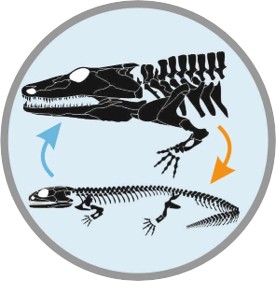
Understandin the ontogenetics and evolutionary modifications in three sensory organs of themnospondyls:
1) Middle ear, which is preserved as the squamosal embayment, middle ear cavity and stapes
2) Eyes as represented by the orbits, scleral rings and palpebral bones
3) Lateral line system that -in aquatic taxa- formed canals or sulci in dermal skull bones.
1) Mapped on a phylogeny, which temnospondyls reduced or lost scleral rings? Does the morphology of the scleral ring yield a phylogentic or an ecological signal?
2) How does size of the scleral ring (as proxy of the eyeball) vary with respect to the size of the orbit between taxa and during ontogeny?
3) Do the scleral rings show morphological and histoligical evidence for lens deformation and corneal accomodation?
4) What is the relationship between eyeball and orbit size in extant terrestrial and aquatic lissamphibians?
1) Are there discontinuities inthe range of expressed morphologies ofthesquamosal embayment and do these reflect distinct ecologies?
2) How is shape variation of the squamosal embayment and do these reflect distinct ecologies?
3) Which morphological and histological correlates for tympanum can be identified, and which clades of temnospondyls had a tympanum?
4) How does morphology and orientation of the stapes vary with the morphology of the squamosal embayment (or its absence)?
1) Mapped on a cladogram, how does the morphology of the lateral line sulci vary between the groups of temnospondyls? Which evolutionary trends can be detected?
2) How can morphological variation of the lateral line sulci be correlated with functional variation in different groups of temnospondyls?
3) How does the lateral line system change throughout ontogeny? Is the change accompanies by a shift in habitat?
4) Do the lateral line sulci show variation in the degree of innervationdepending ontheirmorphology and ontogentic stage?



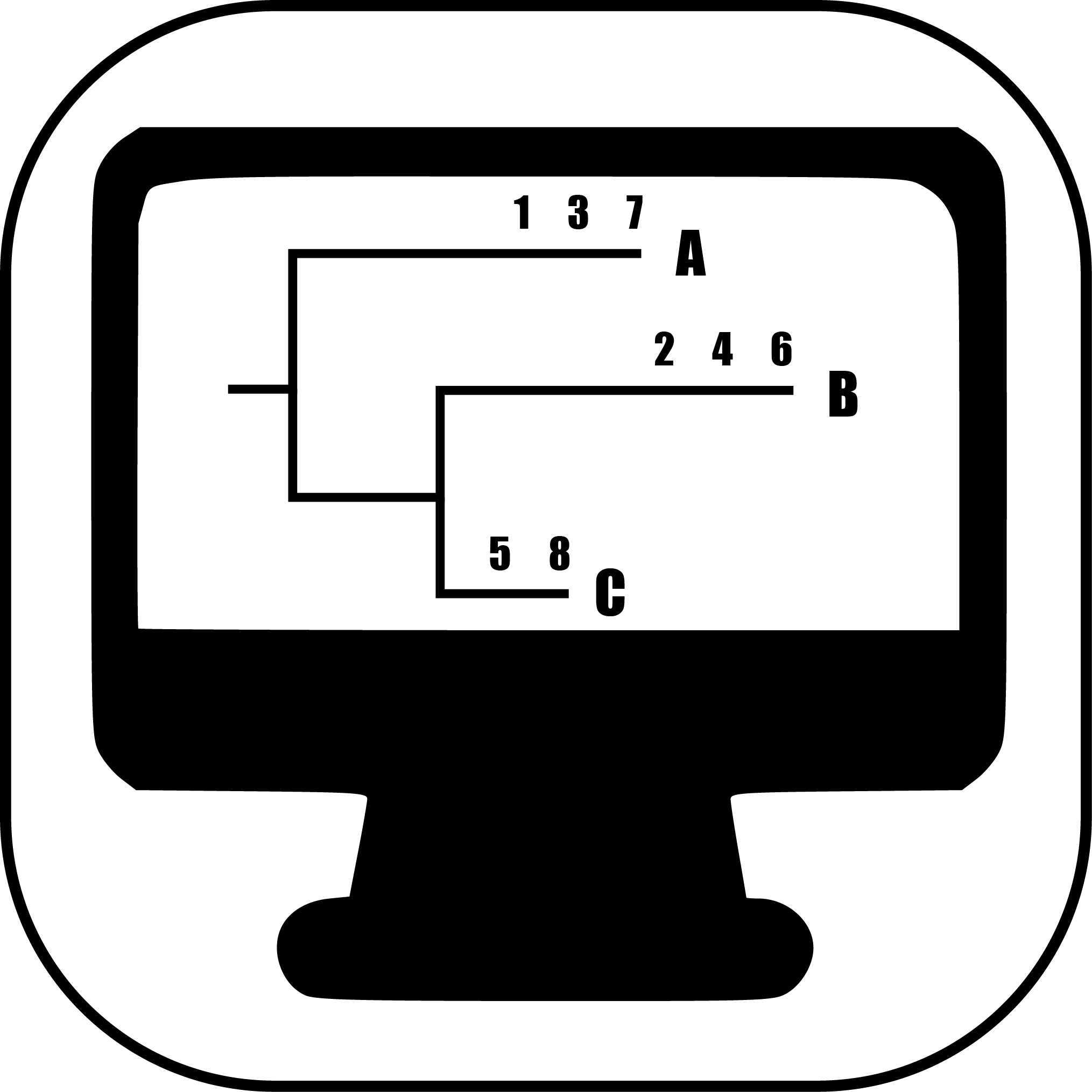
1) Does the morphospace occupation of the various taxa reflect their phyogenetic relationships or rather ecological factors and the mode of life?
2) How are the discrete characters of middle ear, scleral ring and lateral lines distributed in the morphospace? Which characters plot together and suggest a co-evolutionary link? which ones do not show clear correlations or rare mutually exclusive?
3) Do the specific characters as distributedin the morphospace correspond with other characters of the skeleton from which different life habits can be deduced independently?
PD Dr. Marc-Oliver Rödel, Museum für Naturkunde, Berlin
Dr. Lars Schmitz, Claremont McKenna College, USA
Dr. Marcello Ruta, Lincoln University, UK
Dr. Sophie Sanchez, Uppsala University, Sweden