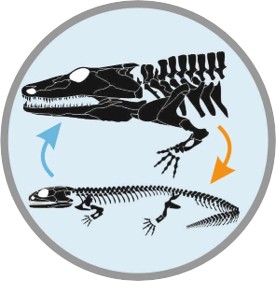
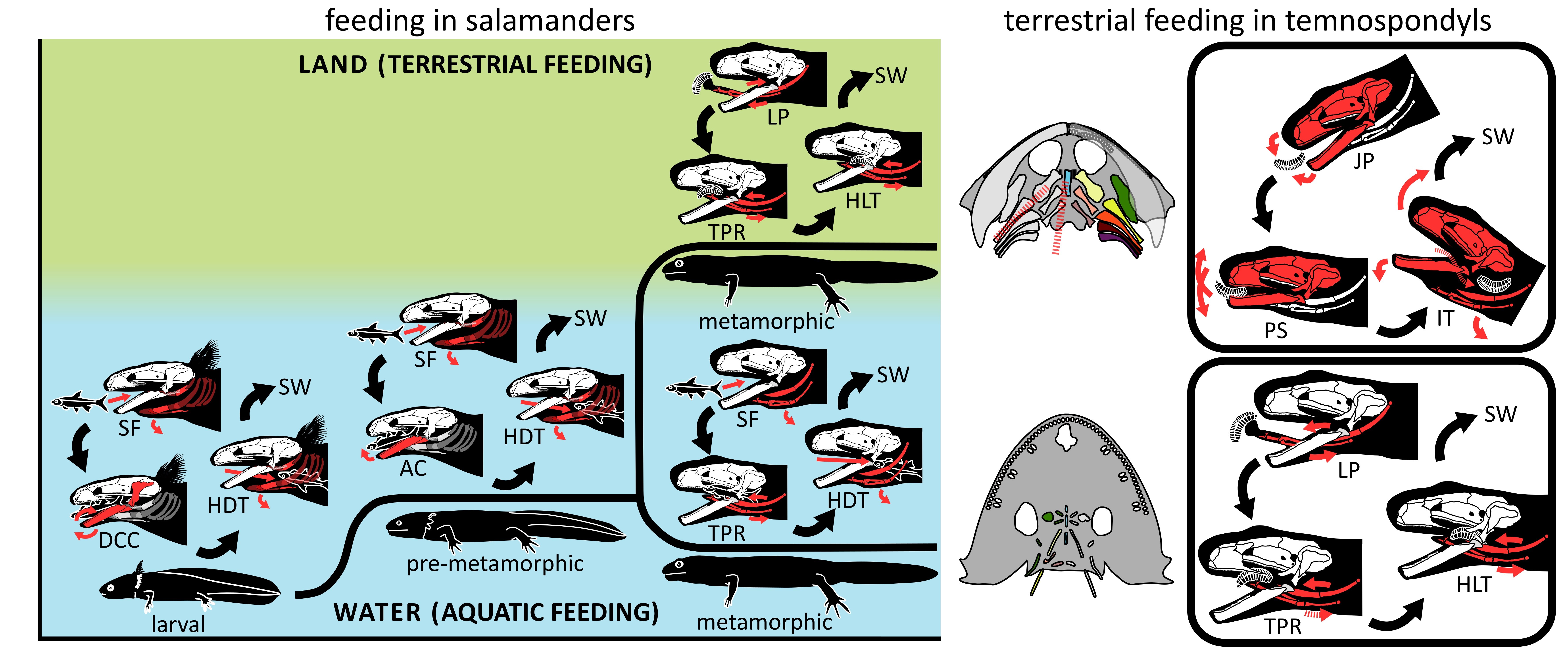
Feeding behaviour and diet represent essential traits of life histories. In fossil tetrapods, they can be studied by integrating the study of functional morphology, finding from fossilsed stomach contengts, bromalites, coprolites, and bite marks as well as studies of recent species of similar morphotypes. The feeding behaviour and diet are particularly interesting in the context of temnospondyl water-toland transitions and their life across both media.
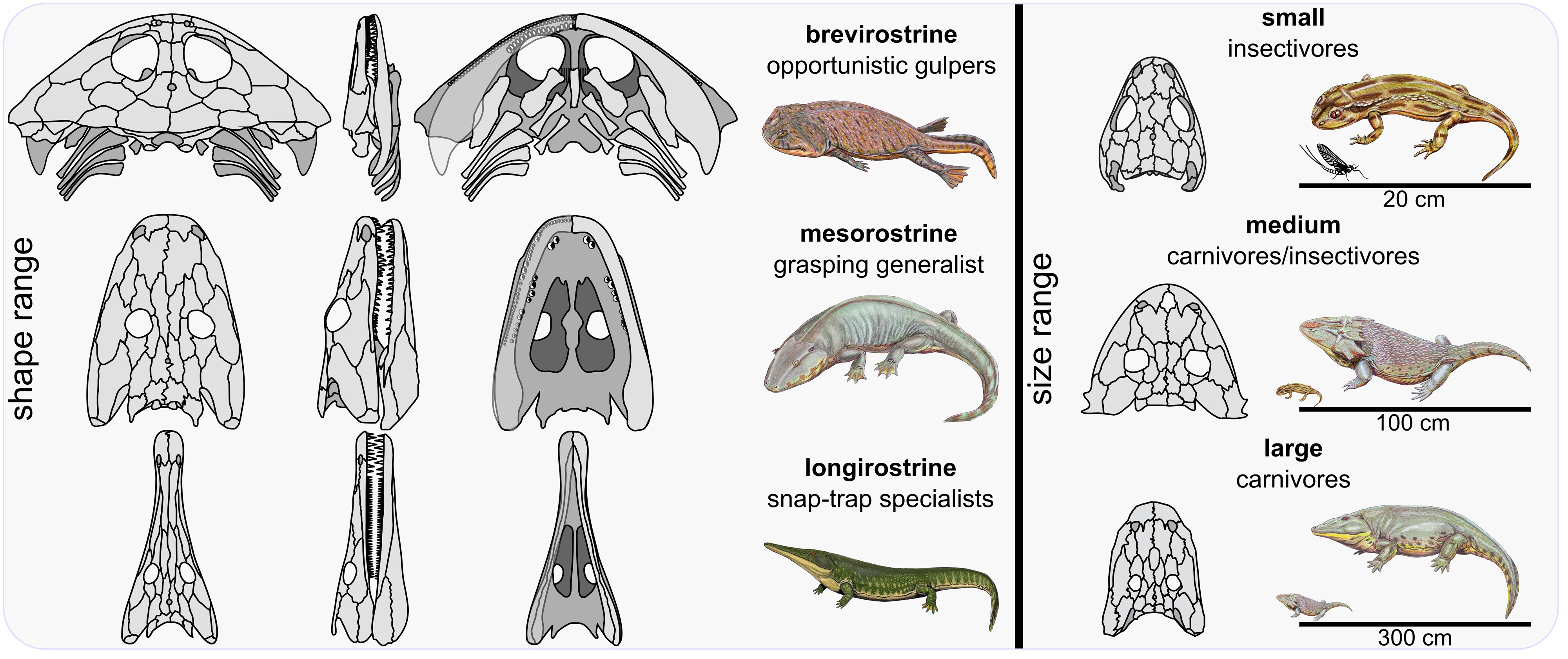
Project E aims to uncover the variation of feeding morphotypes and diets in
temnospondyls and how these relate to ontogeny and phylogeny as well as the
environment (water and air).
The project integrates:
1) 3D morphological studies of the temnospondyl feeding apparatus,
2) ontogenetic and phylogentic variations in body size,
3) paleoenvironmental evidence regarding the inhabited media,
4) fossilised clues on dietary specialisations, and
5) studies of the feeding behaviour and diet in recent analogues.
Which parts of the feeding apparatus help reconstruct the feeding technique across temnospondyl ontogeny?
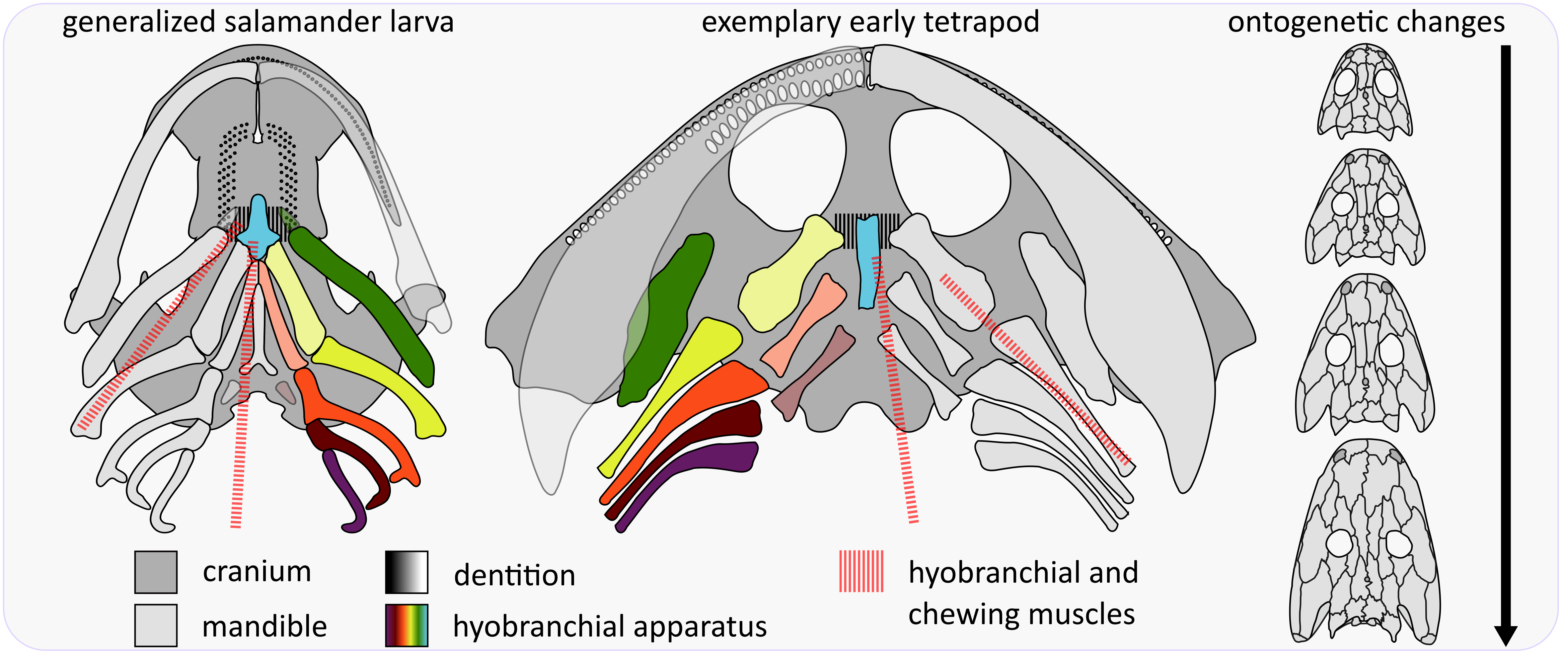
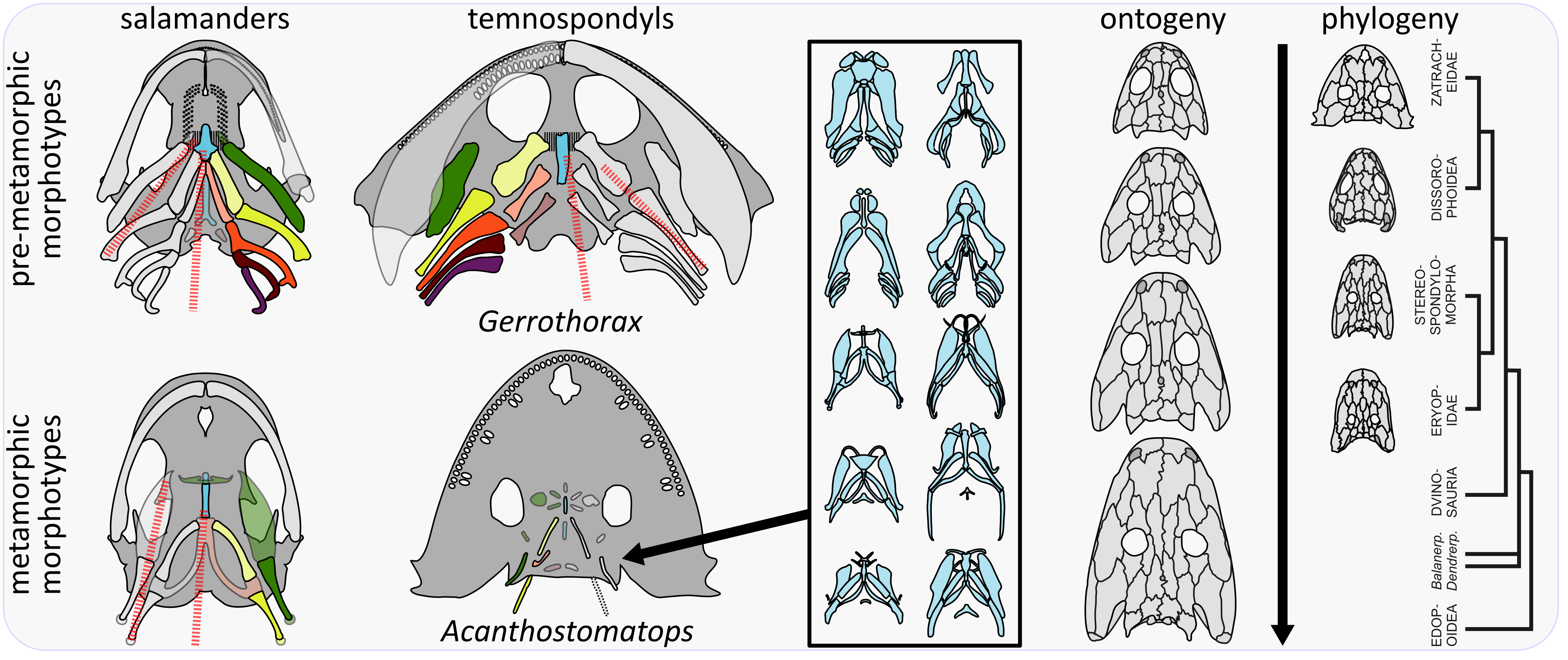
Which morphotypes can we identify and do these relate to ontogeny and phylogeny?
Can we identify distinct aquatic feeding techniques based on different onto- and phylogenetic morphotypes?
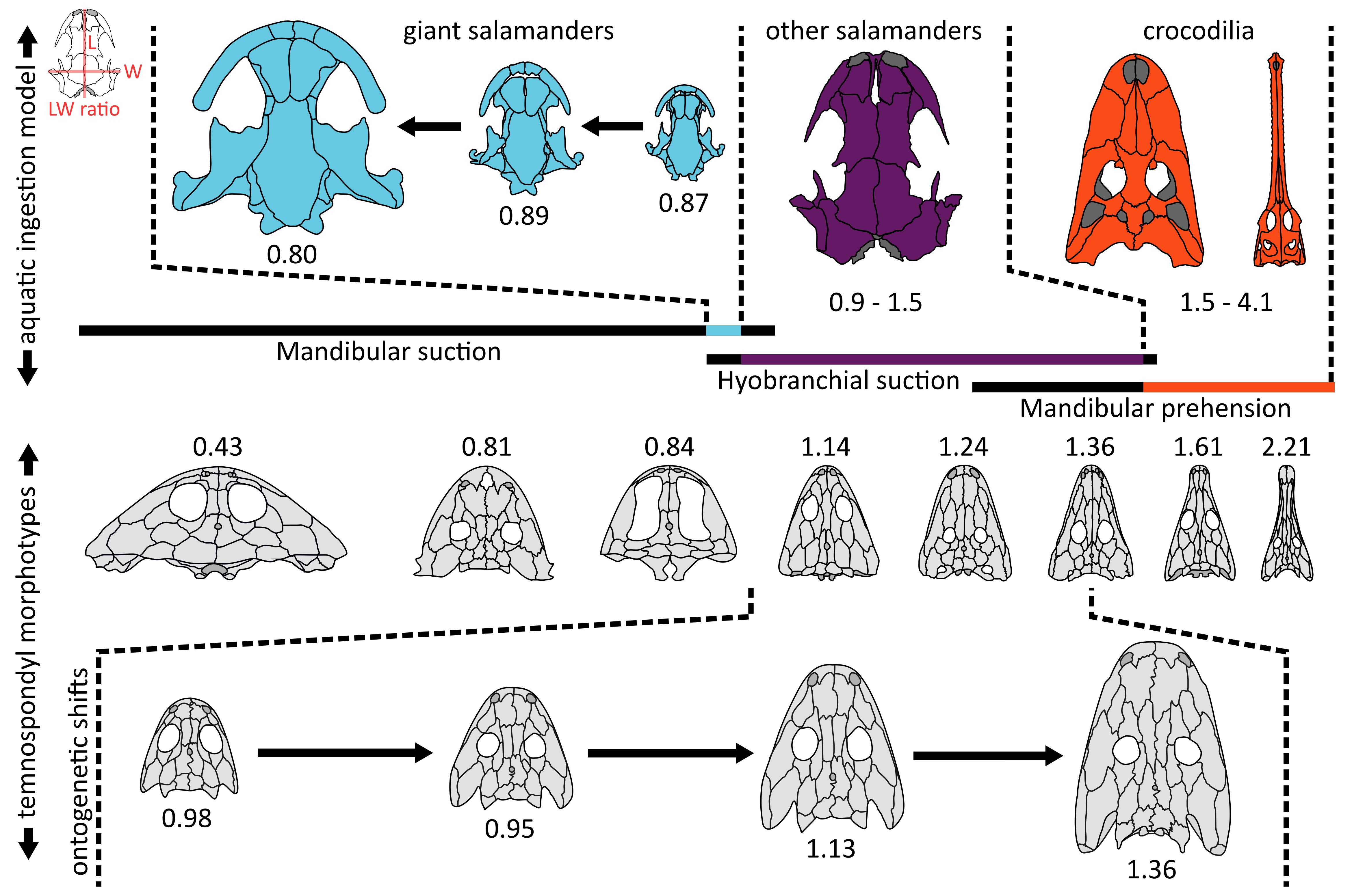
Can we identify distinct terrestrial feeding techniques based on different onto- and phylogentic morphotypes?
Can we constrain or even identify the diets connected to distinct onto- and phylogenetic morphotypes?




1. Ontogeny and phylogeny of temnospondyl feeding morphotypes
2. Diet and paleoecology of distinct temnospondyl feeding morphotypes
3. Ontogeny and phylogeny of terrestrial feeding in temnospomdyls
4. Ontogeny and phylogeny of aquatic feeding in temnospomdyls
5. Origins and paleoecology of powerful bite forces in temnospondyls
6. Tooth shape variability and feeding adaptations in temnospondyls
7. The evolution of temnospondyl feeding